Health Facility Readiness Survey
Project Progress :
Started Date:August 01 2015 Completed Date:April 30 2016
Health Facility Readiness Survey
Categories :Survey
CompletedIntroduction
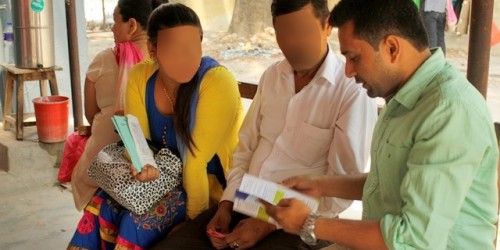
Health facility readiness survey evaluated the readiness of peripheral health facilities in Health 4 Life (H4L) program districts to provide maternal, newborn and child health and family planning services, and determine the effect H4L‘s performance has had on access to and utilisation of health services at the midpoint of the life of the project based on PMP and PPR indicators as specified in the H4L’s M&E Plan.The findings aimed to facilitate improving the efficiency and effectiveness of the program. Data collection was conducted by 32 field researchers from 161 health facilities, 487 exit clients, 322 Female Community Health Volunteers (FCHVs) and District Health Office/District Public Health Office of the 14 districts.
Project Objectives
• To measure current readiness of peripheral HFs with regard to availability of services and staff, basic amenities, basic equipment, standard precautionary practices, laboratory services, drugs and other commodities, and information, education and communication/ behavior change communication (IEC/BCC) materials
• To measure how Health Facility Operations and Management Committees (HFOMC) are functioning, health governance, accountability and gender equality and social inclusion (GESI) with respect to managing health facility readiness to provide quality services
• To measure client satisfaction with the FP/MNCH services they received from health facilities
• To analyze the performance gaps in providing health services from the health facilities and make the information available for planning and programming
• To assess the conduct and performance of district annual reviews in accordance with the Public Health Analytics training and tool
• To assess the comprehensiveness of MoHP’s information system as measured by Health Information System Performance Index (HISPIX)
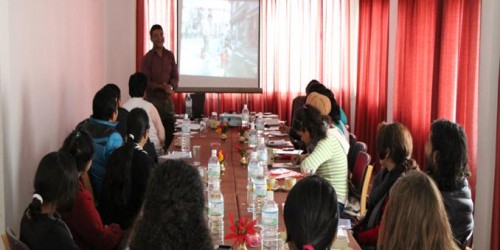
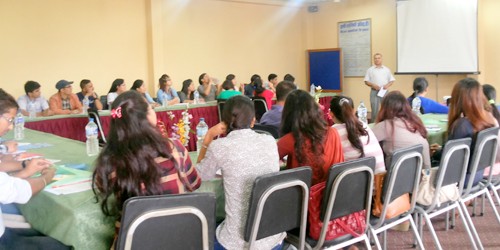
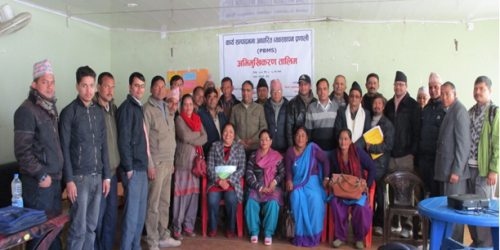
The project mainly comprised of three stages: preparatory phase, implementation phase and deliverable syntheses phase. Project team included experienced and qualified team members. Core team members timely coordinated with the partner agency in finalizing the survey tools into the electronic database. Pretesting was done by the core team members before the tool was introduced in the training. Recruitment of the field researchers was done from the pool of experienced and qualified personnel. Six days intensive training was conducted for the field researchers on survey methods, tools and ethics followed by field trial. The tool went through several level of refinement during these stages. Once the team leader was assured of the capacity of the field researchers to conduct the survey, all 32 researchers were deployed to the field.
At the district level, field supervisors coordinated with the DHO/DPHO and the H4L staffs at the district to develop a district level plan for conducting the data collection. Due to the protests and strikes at that time, we had to postpone our activities on several occasions, and had series of meetings with the H4L team to make a flexible timeline to accomplish the survey. We were cautious on use of tablet for data collection considering the availability of electricity and internet facilities, thus we had also supplied paper backup to our researchers. Real time data monitoring was performed by the Data management officer and necessary feedback was immediately provided to the field researchers. All the uploaded data were safely kept in password protected computer with access only to data management unit.
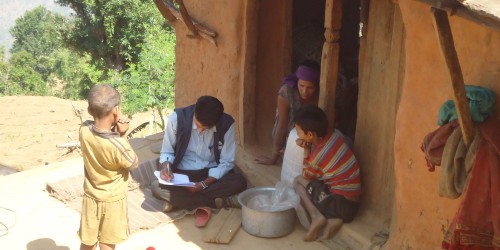
Field monitoring visits were made by core team members from H4L and HERD in selected data collection sites. The joint monitoring visit was helpful for both in terms of understanding the scope of work and existing challenges. The visit was also helpful in terms of developing new strategies to approach the target group and cover all the sample size. The absenteeism of the health workers and long walking distance for the field researchers demanded hard efforts in collecting the data. Furthermore, the unavailability of the exit clients posed serious challenge to achieve our targeted sample size. However this problem was foreseen in the design phase with the H4L and so was managed effectively.
To increase the value for money, we held regular meetings between the core team members and finance team. Such regular interactions explored any gaps between the cost and periodic achievement, and workws towards minimizing this gap. A data analysis framework was also agreed between the HERD and H4L for the data analysis and report write up. As a deliverable we provided H4L with dataset and final report. The findings helped the H4L project implementers in identifying the weaknesses and strengths in their existing project. The lessons learnt from this project are also applicable in the broader context of Nepal's health system, specifically delivering quality family planning services and strengthening the local governance.