National Female Community Health Volunteers Survey
Project Progress :
Started Date:June 01 2014 Completed Date:March 30 2015
National Female Community Health Volunteers Survey
Categories :Survey
CompletedIntroduction
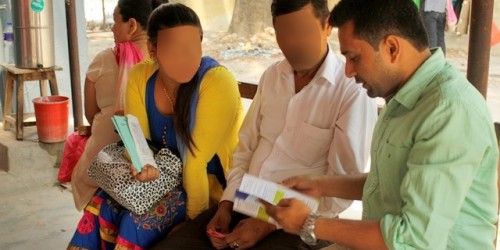
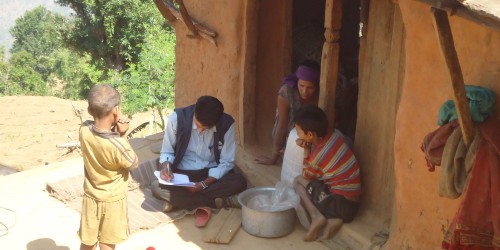
This survey contributed to ensuring a nationally representative and district specific picture of the FCHV programme.The goal of this study was to conduct a cross-sectional assessment of the FCHV program in Nepal for the purpose of informing future policy and investment decisions. Marking 25 years of the implementation of FCHV programme, this study was designed to provide a snapshot of FCHV characteristics, services provided, support received, and FCHV and stakeholder perceptions of the program across 75 districts. The data collection approach includes quantitative survey with a sample of 4302 FHCVs and qualitative study with 34 FGDs with community beneficiaries, FCHVs and members of HFOMC and 48 Key informant interviews with health workers, district stakeholders and national stakeholders. A total of 50 field researchers were recruited for quantitative survey and 6 were recruited for qualitative study. The survey received ethical approval from ethical board of Nepal National Health Research Council (NHRC). Informed consent for both quantitative and qualitative data collection was secured from every respondent.
Project Objective
• To discern perceptions of Female Community Health Volunteers (FCHVs), health workers, community people and other stakeholders in order to provide information to Government of Nepal (GoN) to inform on-going revisions as part of the effort to improve the FCHV programme.
Summary
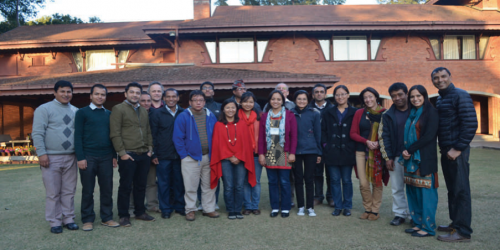
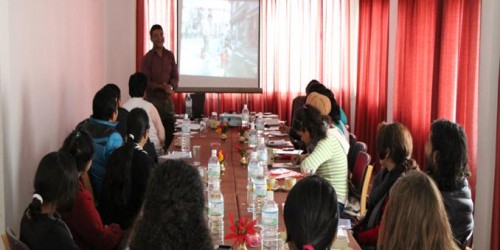
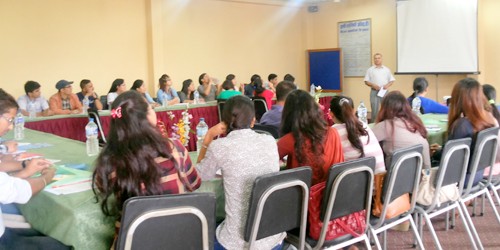
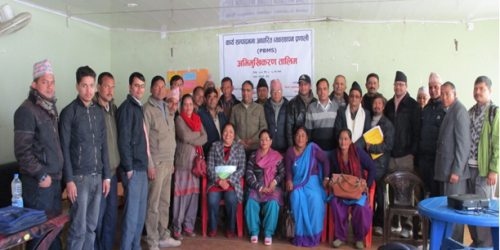
Initial phase included finalization of the study design, survey tools, recruitment of the field researchers and training to the researchers. The methodology and tools for the 2014 survey were developed in collaboration with key stakeholders including the FHD, USAID, the UNICEF, Save the Children’s Saving Newborn Lives program, and FHI 360. The quantitative survey included questions adapted from the 2008 FCHV survey (the most recent of past FCHV surveys) and incorporated new questions based on the current design and context of the FCHV program. The qualitative data collection tools included guides for semi-structured interviews (SSIs), focus group discussions (FGDs), and key informant interviews (KIIs). Stakeholders reviewed these tools and recommended adjustments to ensure that questions reflected the Nepali context. The tools were further revised based on feedback received during training and after piloting. Electronic data collection approach was adopted, however, noting the difficulties in uploading the filled forms in the absence of electricity and internet, paper backup was used by the field researchers to collect quantitative data. Considering the different geographical terrain, flexible timeline was proposed and finalized in coordination with the partner agencies. The information generated from the study assessed the perception of the FCHVs and the community regarding the role and responsibilities of the FCHVs, hence the lessons learned from the study could be useful for the policy makers and program implementers in strengthening the FCHV programme.